Mould Surveys & Inspections Across London & Surrey
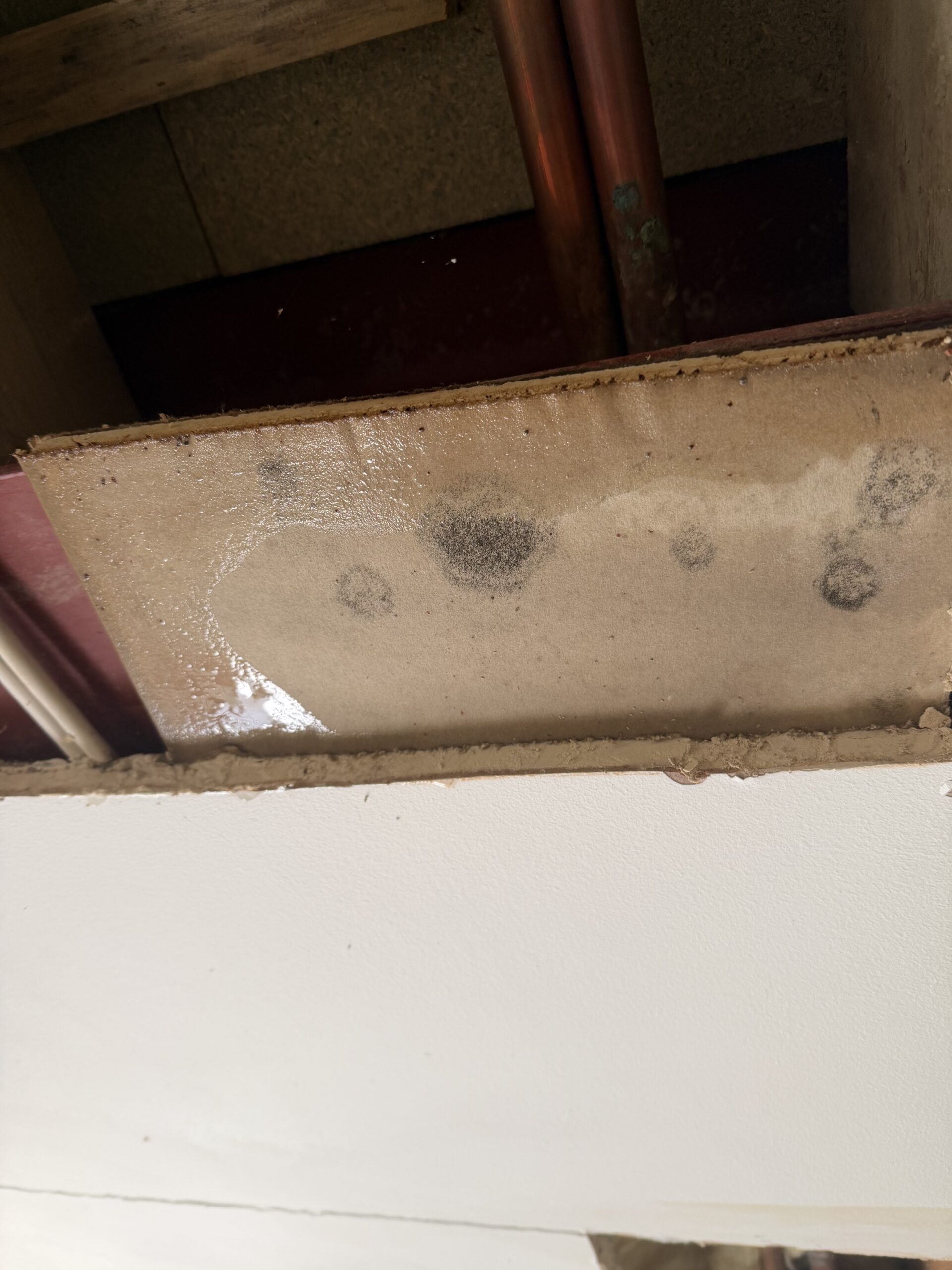
Identify mould type, health risk and moisture source, with independent written evidence.
What is a Professional Mould Inspection?
A professional mould inspection goes beyond simply identifying that mould is present. It systematically documents the extent of mould growth, identifies the species where possible, assesses the health risk to occupants, maps the moisture source driving the growth, and provides a detailed written report that can be used for insurance claims, housing authority complaints, legal proceedings or landlord compliance.
At Damp Mould Leak, our mould inspections are carried out by experienced specialists who understand both the technical aspects of moisture and mould diagnosis and the regulatory framework, including Awaab’s Law requirements for social housing providers.
Why a Professional Inspection Matters
Many properties have mould that appears contained to one surface but is actually extensive behind the wall, inside cavities or within floor and ceiling voids. A proper inspection identifies the true scale of the problem, which is frequently much greater than the visible area suggests.
Identify True Extent
We don’t just look at the visible surface. Thermal imaging and moisture meters allow us to map mould growth behind plaster, inside cavities and in hidden voids.
Species Identification
Where there is any uncertainty about the type of mould present (particularly whether black mould (Stachybotrys) is involved) we can arrange laboratory analysis of surface samples.
Legal-Grade Reports
Our reports are structured to be usable as evidence in Housing Ombudsman complaints, local authority enforcement actions and civil legal proceedings.
Awaab’s Law Compliance
For social housing providers, we produce reports that meet the investigation requirements of the Social Housing (Regulation) Act 2023, with all findings documented to the required standard.
Insurance Evidence
Our reports provide the independent evidence insurers require to process claims for mould damage and associated health impacts.
Pre-Purchase Inspections
If you are buying a property with visible mould, our inspection will tell you exactly what you are dealing with before you commit.
What Our Inspection Covers
- Visual inspection of all rooms and accessible spaces
- Moisture meter readings at multiple points, walls, floors and ceilings
- Thermal imaging survey to identify hidden moisture and cold bridges
- Assessment of ventilation adequacy, extractor fans, airbricks, trickle vents
- Identification of all mould-affected surfaces with photographic evidence
- Assessment of mould type and health risk rating
- Root cause analysis: identifying the moisture source
- Full written report with recommended remediation and costings
How is a mould inspection different from a damp survey?
A damp survey focuses on diagnosing moisture problems in the building fabric. A mould inspection focuses specifically on the mould. Its extent, type, health risk and cause. In practice, most of our inspections combine both elements.
Can you tell what type of mould it is?
We can identify visible mould characteristics and assess likely species from their appearance and growth patterns. For definitive species identification, we arrange laboratory analysis of surface samples, which we can include in our inspection service.
How quickly can you inspect?
We confirm the earliest available inspection appointment when you call.
Ready to Get Started?
Surveys available across London and Surrey. Urgent cases are prioritised.
Frequently Asked Questions
How long does a damp survey take?
A standard residential damp survey takes 1 to 2 hours depending on property size. We check all accessible areas including loft space (if safe and accessible), subfloor (if there is a suspended floor), external walls, internal walls, and roof. The written report with moisture readings follows the visit; ask about report timing when you book.
Is black mould dangerous?
Black mould (particularly Stachybotrys chartarum) produces mycotoxins that are harmful to health, especially in children, elderly people, and those with respiratory conditions. Even common mould species (Aspergillus, Penicillium, Cladosporium) found in damp UK properties can cause allergic reactions and respiratory problems. Professional treatment and resolution of the underlying damp cause is strongly recommended.
What are the signs of a hidden water leak?
Signs of a hidden leak include: unexplained wet patches on walls or ceilings with no obvious source, water meter turning when all taps are off, low water pressure, musty smells in rooms with no visible damp, and damp patches that appear and disappear. Acoustic and thermal imaging leak detection can locate hidden leaks without unnecessary damage.
Can you treat mould without a survey first?
We recommend a survey before treatment in most cases, particularly for severe or recurring mould, or where the cause is not clearly condensation. Treating mould without identifying the cause risks the mould returning quickly. For straightforward condensation mould in well-ventilated rooms, a survey may not always be necessary. Call us and we will advise based on your specific situation.
Mould survey vs mould inspection. What’s the difference?
They’re the same thing. Whether you call it a mould survey or a mould inspection, our surveyors identify the mould, find the moisture source driving it, assess the health risk and give you a written report with the findings and what to do next. If you’ve been told you need a “mould survey” for a landlord, council, insurer or purchase, that’s exactly what we provide across London & Surrey.
Request a mould inspection
Tell us about the mould and the property and one of our team will get back to you as soon as we can during business hours. We carry out the inspection and provide a written photographic report with the cause and recommended works. Prefer to talk now? Call 0800 054 1524 or WhatsApp 07733 019492. London & Surrey.
Mould risk assessment and hazard investigation
A mould inspection is a hazard investigation: where the mould is, how far it extends, and what moisture is feeding it. We look behind furniture, in wardrobes on external walls, at window reveals, lintels and slab edges where thermal bridging creates cold spots, and inside cupboards under sinks. We record humidity, surface temperature and dew point room by room, test extract fans, and profile walls for leaks and structural damp. The result is a mould risk assessment that explains the cause and a scope that removes it. For tenancies, it doubles as a landlord mould report and, where a dispute has started, factual evidence for a disrepair claim. See housing disrepair reports.
Sampling, treatment and prevention
- Sampling: air sampling or surface swab tests with laboratory analysis can be arranged where identification or a clearance record is needed. For most homes the priority is proving and removing the moisture source.
- Treatment: heavy growth is removed under containment with HEPA filtration, then surfaces are cleaned and treated; see mould treatment and fogging. Treatment is specified only once the cause is dealt with.
- Anti-mould paint slows regrowth on a dry, treated surface; on a cold, wet wall it fails within months.
- Prevention: working extraction with a humidistat or run-on timer, trickle vents, heating that keeps surfaces above dew point, and insulation of cold bridges.
Frequently Asked Questions
Do you test for mould spores?
Where appropriate. Air and swab sampling can be arranged, but in most domestic cases it does not change the fix, which is to remove the moisture source.
Does anti-mould paint work?
Only on a surface that has been dried and treated and will stay above its dew point. It is a finish, not a cure.
Is a mould inspection the same as a damp survey?
They overlap. A mould inspection focuses on the growth and the conditions causing it; a damp survey covers the whole building fabric. Many instructions need both and we do them in one visit.
Last reviewed: 27 October 2026. Independent investigation and written reports. Repairs are quoted separately.