Rising Damp Treatment: What to Expect from Start to Finish
You have had a surveyor look at your property and they have told you the words nobody wants to hear: rising damp. Now you need to know what actually happens next: how the treatment works, how long it takes, how much it costs, and whether it will last. This guide walks you through the entire process without the jargon.
What Rising Damp Actually Is
Rising damp is ground moisture moving upward through masonry (brick, stone, or mortar) by capillary action. Think of it like water being drawn up through a series of very fine tubes. The moisture carries dissolved salts from the ground, and as the water evaporates from the wall surface, those salts are deposited. This is what creates the characteristic tide mark at low level, usually below 1.2 metres, along with the powdery, crystalline deposits on wall surfaces known as efflorescence.
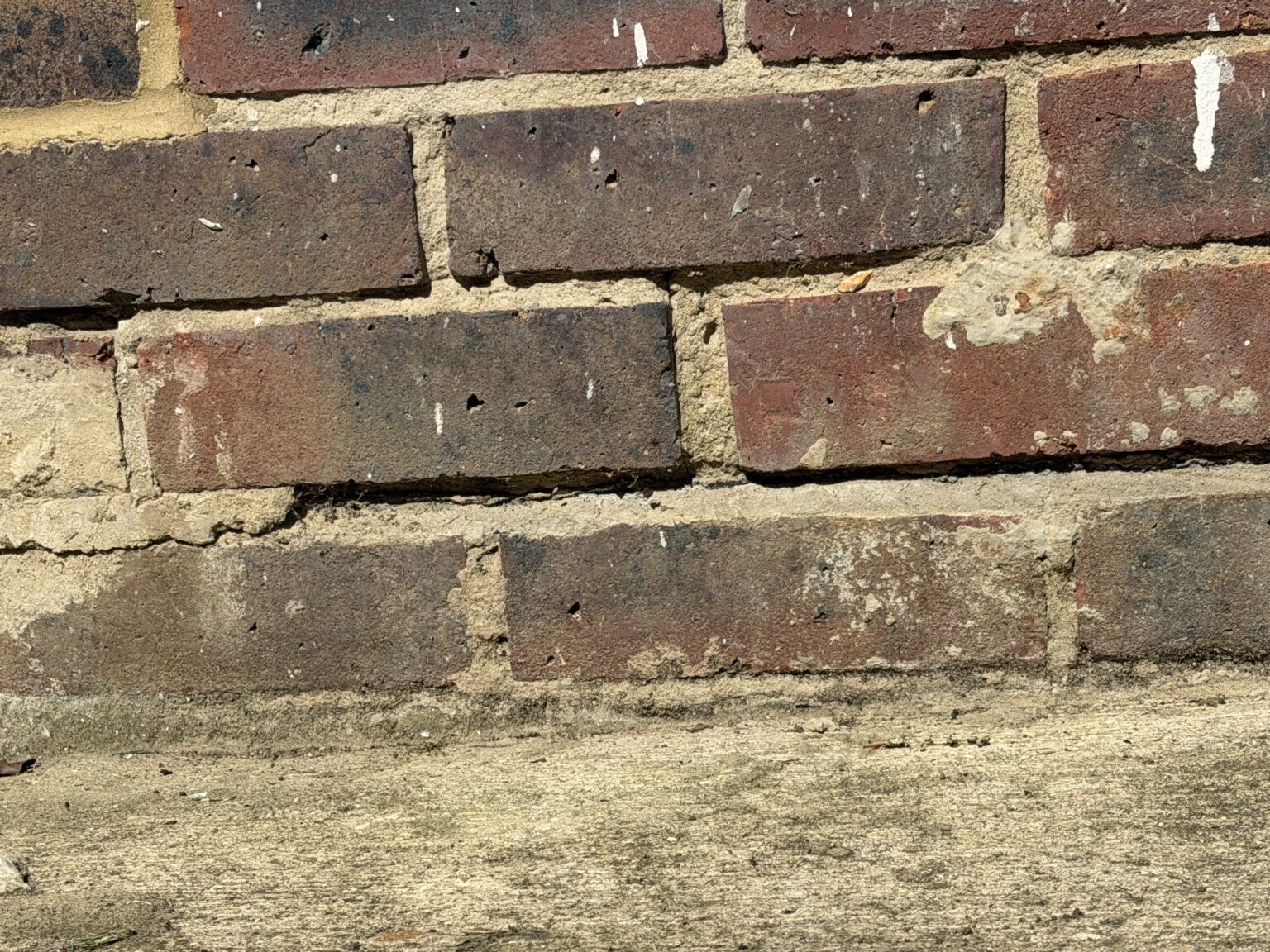
Historically, buildings relied on physical damp proof courses (DPCs), typically a layer of slate, lead, or bitumen at or near ground level, to interrupt this capillary pathway. When these fail, degrade, or are absent (as in many Victorian and Edwardian properties), rising damp can establish itself through the wall fabric.
Step One: The Survey, and Why Nothing Should Happen Without It
A professional damp survey is the foundation of any rising damp treatment. Without it, you are guessing at the cause, the extent, and the correct remedy.
During a rising damp survey, a qualified surveyor will:
- Take moisture readings at multiple points across the wall using a calibrated moisture meter
- Inspect the external ground levels (a high external ground level bridging the DPC is a common cause)
- Check for bridged air bricks and blocked subfloor ventilation
- Look for evidence of plumbing leaks that may be mimicking rising damp
- Assess the condition of any existing DPC
- Identify whether the plaster is salt-contaminated
The survey produces a written report confirming the diagnosis, the extent of affected walls, and a recommended treatment specification. Do not proceed with any contractor who skips this stage or offers a rising damp treatment over the phone without a site visit.
Step Two: How Chemical DPC Injection Works
The most widely used rising damp treatment in the UK is chemical damp proof course injection. Here is the process, step by step:
1. Drilling
A series of holes are drilled into the mortar course at low level, typically 150mm above external ground level. Holes are spaced approximately 100 to 120mm apart along the affected wall length. In a 230mm (9-inch) solid brick wall, holes are usually drilled at a slight downward angle to allow fluid to penetrate fully. For thicker or cavity walls, the specification changes accordingly.
2. Injection
A silane or siloxane-based chemical cream or fluid is injected into the drilled holes. Modern injection creams are the standard. They are cleaner than fluid injection, less likely to be diluted by existing moisture in the wall, and more reliable in terms of even distribution. The chemical migrates through the masonry and reacts to form a water-repellent barrier, effectively a new DPC in situ.
3. Hole filling
Once injection is complete and the product has been given time to penetrate, the drill holes are filled with mortar or plugged. The wall is then ready for the next stage.
Step Three: Why the Plaster Must Be Replaced
This is the part many homeowners do not expect. Once the chemical DPC is in place, the existing plaster must come off, all of it in the affected area, typically to a height of 1.2 to 1.5 metres above floor level.
Why? Because the existing plaster has been contaminated by the salts carried up by the rising damp. Even after the DPC injection stops further moisture movement, those hygroscopic salts remain in the plaster. They will continue to attract moisture from the air, creating damp patches that look identical to ongoing rising damp, even though the source has been stopped. If the old plaster is left in place, the treatment appears to have failed.
Replacement plaster must be a salt-resistant (renovating) plaster. Standard browning or bonding plaster is not appropriate. It is not formulated to resist the salt migration that will continue from the residual salts in the masonry.
Timeline: What to Expect and When
| Stage | Typical Duration |
|---|---|
| Damp survey | Half day to full day on site; report within 1 to 3 days |
| DPC injection | 1 to 2 days depending on wall length |
| Old plaster hack off and wall drying | 1 day to hack off; 3 to 6 months for wall to fully dry |
| Replastering | 1 to 3 days; must be allowed to cure before decoration |
| Redecoration | Once plaster is fully cured, typically 4 to 6 weeks after application |
The most common source of frustration is the drying time. Homeowners sometimes expect walls to look perfect within weeks of injection. The full remediation cycle (from injection to completed redecoration) often takes 4 to 8 months, with most of that time spent waiting for the masonry to dry out and the new plaster to cure.
Guarantees: What You Should Expect
Reputable rising damp contractors provide guarantees backed by the Certificated Surveyor in Remedial Treatments (CSRT) qualification and, for injection-based treatments, guarantees registered with the Chemical Injection Guarantee Association (CIGA). CIGA-backed guarantees run for 20 to 30 years and are transferable to a new owner if the property is sold, which matters for buyers and mortgage lenders.
A guarantee is only as good as the contractor who provides it. Always check that the contractor is a CSRT member and that the guarantee paperwork is properly registered, not just printed on headed paper.
Will Rising Damp Come Back?
Properly executed rising damp treatment should not fail within the guarantee period. When rising damp returns after treatment, the most common causes are:
- Ground levels not addressed: If external ground level was bridging the original DPC and was not lowered as part of the remediation, moisture will continue to bridge the new chemical DPC
- Old plaster not replaced: Salt-contaminated plaster left in place will continue to show damp symptoms regardless of whether the source has been stopped
- Incorrect diagnosis: The original problem was not rising damp at all, penetrating damp or a plumbing leak was the actual source, and DPC injection was the wrong treatment
- Poor installation: Insufficient drilling depth, incorrect hole spacing, or wrong product specification
If you have rising damp symptoms in a property that has already been treated, a new survey is the starting point. Read more about our full damp proofing service.
Cost Range for Rising Damp Treatment
Rising damp treatment costs depend on the length of affected wall, the wall construction, whether tanking is required in addition to injection, and local labour rates. Broad ranges in 2026:
- Chemical DPC injection only: priced per linear metre of affected wall
- DPC injection including hack-off and replastering: the replastering usually costs more than the injection itself
- Full treatment including multiple walls: scales with the number of walls and the plaster area
- Large Victorian terrace with extensive rising damp: the top of the range, always specified after a survey
These figures should be confirmed by a survey and written quotation. Prices in London run higher than in Surrey and Kent due to labour costs.
Red Flags When Getting Quotes
Rising damp is unfortunately an area where cowboy operators are common. Watch for:
- A quote provided without a physical site visit
- No written survey report or specification
- High-pressure sales tactics with “today only” discounts
- Claims that their proprietary system is the only effective method
- No CSRT qualification or CIGA-registered guarantee on offer
- Extremely low prices: a whole-room treatment that includes replastering cannot credibly be done for a token sum
- No mention of replacing the plaster (this is a fundamental step, any contractor who plans to leave old plaster in place and redecorate over it is not doing a proper job)
Frequently Asked Questions
How long does rising damp treatment take?
The injection itself takes 1 to 2 days. However, the full remediation process (including drying time, replastering, and redecoration) typically takes 4 to 8 months from start to finish. The masonry needs 3 to 6 months to dry out fully before replastering can be completed, and new plaster needs 4 to 6 weeks to cure before decoration.
Does rising damp treatment require replastering?
Yes, always. Plaster in a rising damp-affected area is contaminated with hygroscopic salts that will continue to attract moisture even after the DPC injection stops water movement. If old plaster is left in place, damp patches will persist and the treatment will appear to have failed. Salt-resistant renovating plaster must be applied after the wall has dried out.
How much does rising damp treatment cost in the UK?
The cost of rising damp treatment depends on the length of wall to be injected, how much plaster has to be hacked off and replaced, and how many walls are affected. London prices tend to run above Surrey and Kent rates. Always get a written quote following a professional survey. We confirm our survey fee before we attend and quote any treatment separately.
What guarantee should I get for rising damp treatment?
Look for a CIGA-backed guarantee of 20 to 30 years for chemical DPC injection. This guarantee is transferable to future owners of the property, which is important for mortgage lenders. The contractor should be a CSRT (Certificated Surveyor in Remedial Treatments) member. Always ask for the guarantee certificate in writing, not just a verbal assurance.
Can rising damp be confused with other types of damp?
Yes. Penetrating damp, plumbing leaks, and condensation can all produce similar symptoms: damp patches, mould growth, and staining on walls. Rising damp specifically appears at low level (below 1.2 metres) with a tide mark and salt deposits. A professional damp survey using calibrated moisture meters is the only reliable way to distinguish between types and ensure the correct treatment is applied.
Think You Have Rising Damp? Start With a Survey.
We carry out professional damp surveys across London, Surrey, and Kent. Written report, clear diagnosis, no pressure. Call or WhatsApp to book.
Last reviewed: 27 October 2026. Independent investigation and written reports. Repairs are quoted separately.