Damp, mould and leaks in Mayfair
Leak Detection, Damp & Mould Surveys in Mayfair
For homeowners, landlords and managing agents in Mayfair in the City of Westminster: non-invasive leak detection, proper damp diagnosis, mould investigation and treatment, and written reports built for insurers, across W1.
Get a call back☎ 0800 054 1524WhatsApp us
Fully insured · Non-invasive methods first · Written reports included · London & Surrey
Why Mayfair properties need careful leak detection
Mayfair lies in the City of Westminster between Oxford Street, Regent Street, Piccadilly and Park Lane. Building began in the 1660s and by the end of the eighteenth century most of the area had been rebuilt as high-value housing around Hanover, Berkeley and Grosvenor Squares; the street plan laid out by Thomas Barlow for the Grosvenor family survives almost intact even though most of the buildings have been rebuilt since. The great estates (Grosvenor, Albemarle, Berkeley, Burlington and Curzon) still own much of the freehold.
That ownership pattern shapes how leak investigations work here. Most homes are flats in period or purpose-built blocks managed by agents, with freeholder consent, listed-building constraints and expensive finishes to protect. Our engineers work non-invasively first (calibrated moisture mapping, thermal imaging, acoustic listening, tracer gas and pressure testing) so that marble, panelling and plasterwork are opened only once, at the point the evidence identifies.
The written report is as important as the find. For a leak that crosses from one flat or a communal riser into another, the agent and the insurers need an independent account of source, route and damage before responsibility and cover can be settled. We provide exactly that, with photographs and readings, and then quote the repair where it falls within our team’s scope.
Housing in Westminster (Census 2021): 94,816 households: 27% owner-occupiers, 44% private renters, 28% social renters. Housing stock: purpose-built flats 70%, converted and other flats 20%, terraced 7%, semi-detached 2%, detached 1%.Source: ONS Census 2021, tables TS054 (tenure) and TS044 (accommodation type), via Nomis.
What we do in Mayfair
One team for the investigation, the report and the remedial work that follows.
Leak detection
When the water is coming from somewhere nobody can see, our instruments find it and our report explains it.
Trace & access (insurance)
We find and expose the leak and document it for your escape-of-water claim.
Insurance-ready reports
A report that answers the adjuster’s questions before they are asked: cause, route, extent, evidence.
Urgent leaks & burst pipes
Water through a light fitting or a pipe that has let go? Call and we prioritise the visit.
Mould treatment & investigation
Investigation first, then treatment of the affected surfaces and a written record for landlords and tenants.
Damp & mould surveys
Room-by-room moisture mapping that separates condensation from penetrating and rising damp.
Moisture mapping & thermal imaging
Infrared scanning and calibrated meters that map the wet area and point to its source.
CCTV drainage surveys
Drain condition surveys when the damp is at low level and the gully or soil stack is the suspect.
The water meter test: is there a leak at all?
A high bill, a warning letter from the water company or a meter that creeps while the house is empty are common starting points in Mayfair. Sometimes there is a leak on the supply pipe between the boundary and the house; sometimes a dripping overflow, a passing toilet valve or a neighbour’s shared supply is the explanation.
Our engineers isolate and test in stages (at the stop tap, at the meter, on the internal pipework) and record the results so you know whether there is a leak, where it is and whose pipe it is on. A written report of a meter test is often what a water company asks for before it will consider a leak allowance.
Independent evidence when there is a dispute
Leak disputes between flats, between landlord and tenant, or between a buyer and a seller in Westminster turn on evidence: where the water came from, how long it has been happening and what it has damaged. Memory and photographs on a phone rarely settle it.
Our engineers record calibrated readings, thermal images and dated photographs at the time of the investigation and write them up as a standalone report. It is commissioned by you, not by an insurer or a freeholder, and it says what the evidence shows, including when the evidence does not support the theory you arrived with.
Why older Mayfair properties get damp
Solid brick walls, suspended timber ground floors, original lime plaster and later cement renders all behave differently when they get wet. Add blocked sub-floor vents, raised garden levels and a patio bridging the damp-proof course, and a wall that managed for a century starts to show tide marks and blown plaster.
The investigation looks at the whole picture: how the wall was built, what has been applied to it since, where the water is coming from and how it is supposed to leave. The remedy is then matched to the cause rather than a standard treatment applied to every wall.
Mould in Mayfair: treat the cause, not the stain
Black mould on a cold external wall, behind a wardrobe or around a window reveal is almost always a moisture problem first and a cleaning problem second. In Mayfair we see three patterns: condensation on cold surfaces in rooms that are hard to heat and ventilate, mould that follows a slow leak from a bathroom or a flat above, and mould at skirting level where rising or penetrating damp keeps the plaster wet.
Our team measures surface and air moisture, checks the ventilation that is actually working, and looks for the leak before recommending anything. Treatment of the affected surfaces follows the diagnosis, and the written report records what was found so a landlord, agent or housing officer can see the cause and the fix.
Timber, floors and joist ends: the hidden damage from leaks
A slow leak under a bath, behind a kitchen kickboard or from a radiator pipe in a screed can run for months before anyone notices. By the time a floor feels springy or a skirting crumbles, the joist ends and wall plates may have been wet for a long time.
Our investigation checks the timber as part of the leak trace: moisture content, decay, and whether the sub-floor is ventilating. The report sets out what needs replacing and what can dry out, so the repair quote covers the real extent of the damage rather than the visible patch.
Real investigations by our team
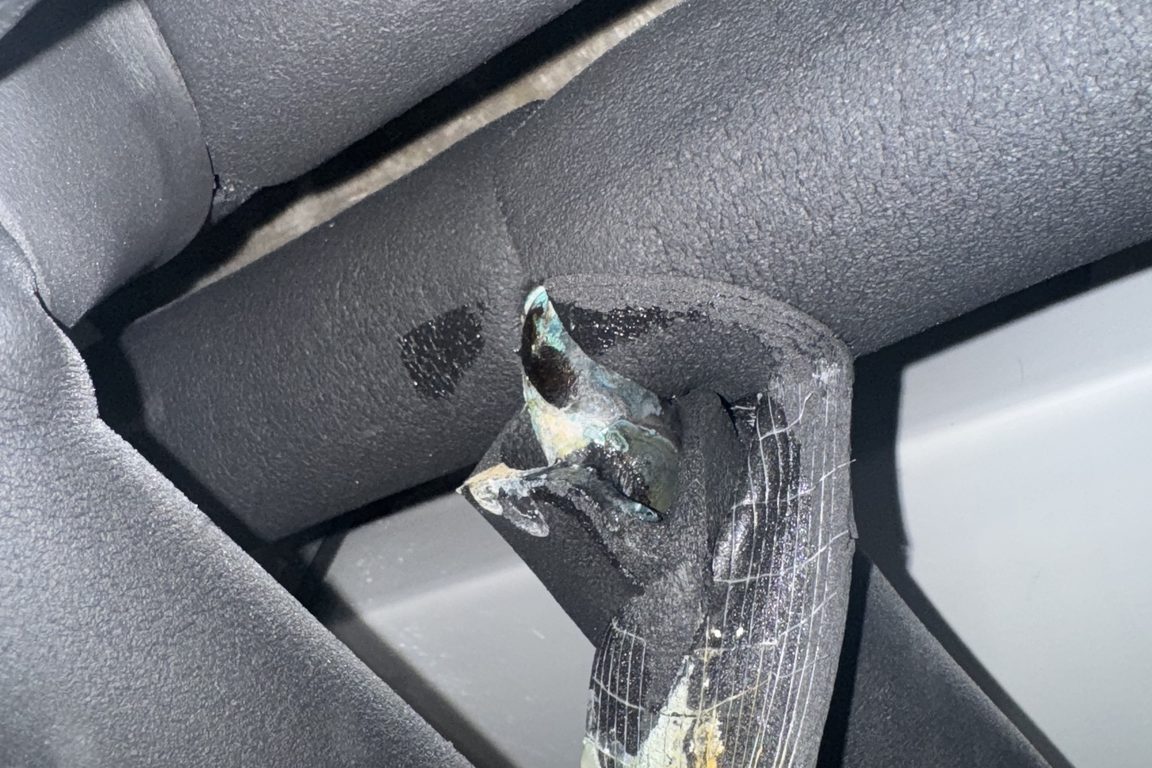
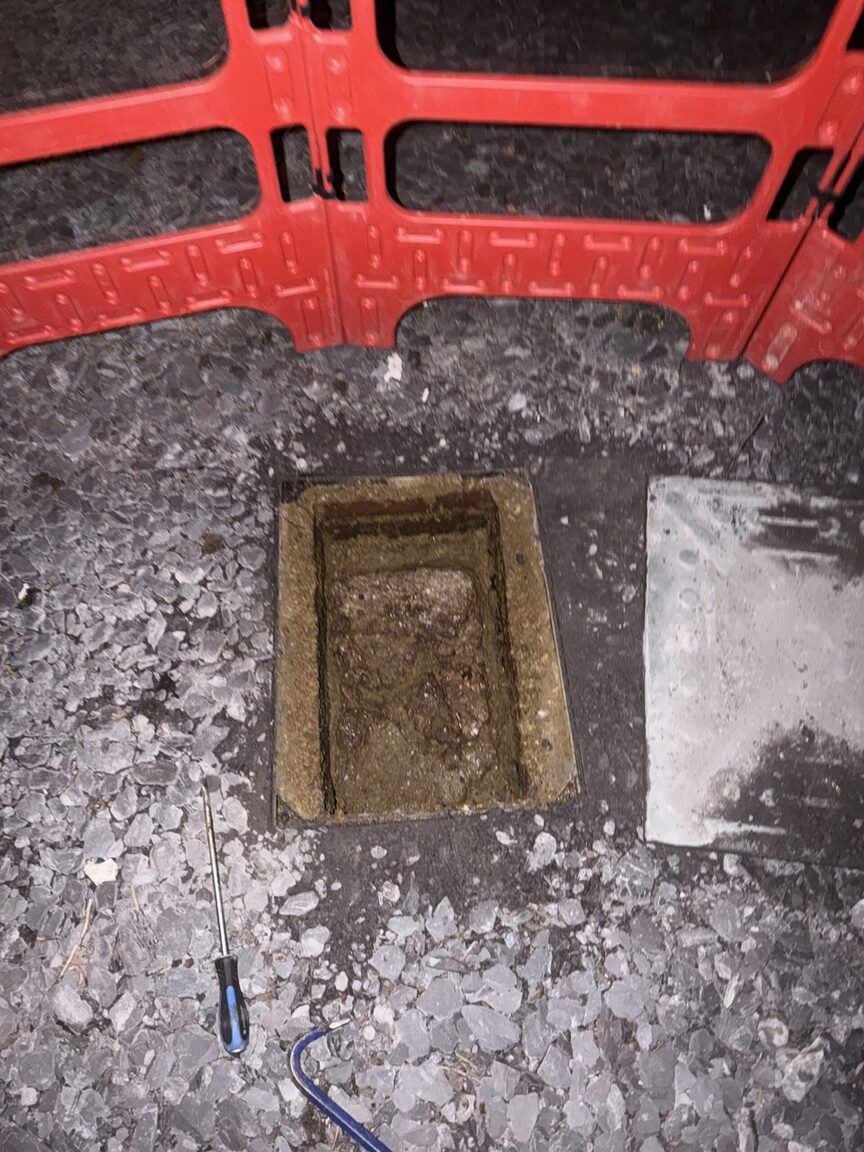
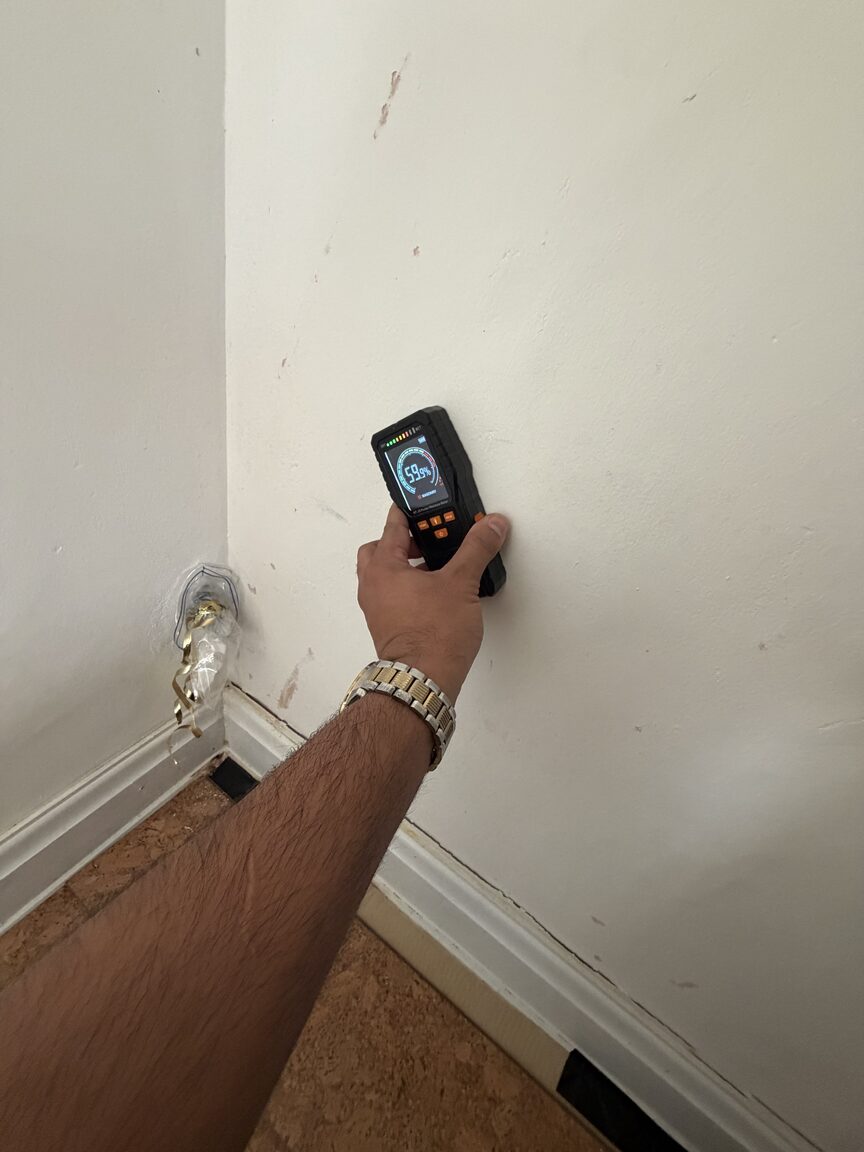
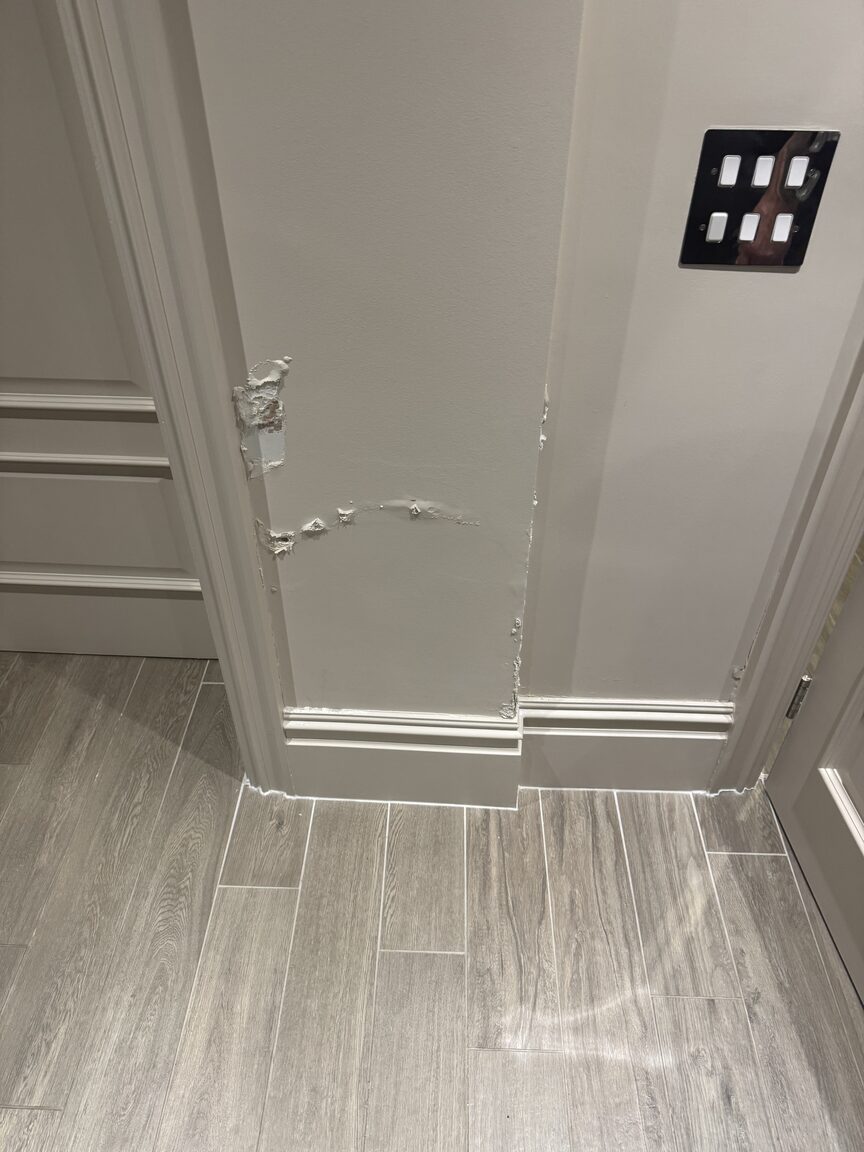
Examples from DML investigations across our service area. Our own photographs, not stock imagery.
How we investigate
Instruments before tools: the opening-up, if any, happens at one proven spot.
History first
What you have seen, when it started, what has already been tried. All of it narrows the search before we arrive.
Moisture profile
Readings taken in a pattern up and across the wall reveal whether the water is rising, penetrating or condensing.
Infrared survey
Used where it helps, thermal imaging picks out the wet patch and the pipe run feeding it beneath floors and behind plaster.
Pinpointing pipe leaks
Acoustic listening and tracer gas, where suitable, locate the leak to a small area before any opening-up.
Proving the pipe
A pressure drop on an isolated circuit confirms the leak is in that pipework and nowhere else.
Photos & written report
Photographs, readings and clear findings in a written report you can act on.
Your written report
The report sets out what we found, how we found it, what caused it and what should happen next, with the photographs and readings to back each point. If the next step is a repair, our team prices it as a separate item and can do the work or manage it on your behalf.
Book a damp, mould or leak investigation in Mayfair
Tell us what is happening and where; our team will call back, confirm the scope and book the visit. Live leaks come first.
Get a call back☎ 0800 054 1524WhatsApp us
Insured
Included
Prioritised
Evidence Reports
Terms
Request a call back in Mayfair
A few details about the problem and the property, and we will ring you to talk it through. Urgent? Call 0800 054 1524 now.
Around Mayfair: neighbouring areas
We also attend St James’s, Soho, Belgravia, St Giles, Bloomsbury, Paddington and Somers Town.
Part of Westminster borough page · All London boroughs · W postcode area · All locations
Common questions from Mayfair customers
Do you carry out the repairs as well as the investigation?
Yes. The investigation and report come first; remedial works are quoted separately and our team carries them out or manages them for you, with written workmanship terms.
Will you tell me if there is no leak?
Yes. Some investigations end with no leak found (condensation, a one-off spill or an old, dried-out stain) and the report says so plainly. A written negative result is often exactly what a water company or insurer needs.
Can you investigate a leak coming from the flat above?
Yes. We establish whether the water is from the flat above, a communal pipe or your own property, document the route and write it up so the freeholder, managing agent and insurers can act. Access to the other flat helps and we will say so if it is needed.
How do you tell condensation from a leak?
By pattern and measurement. Condensation sits on cold surfaces and varies with weather and use; a leak makes a defined wet area that does not dry out and often tracks from a fitting or pipe run. Readings and thermal imaging settle it.
Do you cover Mayfair?
Yes. Mayfair (W1) is covered by our own team, as is the rest of Westminster. Call 0800 054 1524 or WhatsApp us for the earliest available appointment; urgent leaks are prioritised.
Last reviewed: 27 October 2026. Independent investigation and written reports. Repairs are quoted separately.