CCTV Drainage Surveys & High-Pressure Jetting
HD camera surveys, blockage clearance and drainage repairs. We find the problem and fix it.
What is a CCTV Drainage Survey?
A CCTV drainage survey uses a high-resolution, waterproof camera mounted on a flexible cable or self-propelled crawler to inspect the inside of underground and internal drainage systems. The camera transmits live footage to a monitor and records a full video of the inspection, allowing us to identify exactly what is wrong — before any excavation or significant disruption.
Our CCTV drainage surveys cover internal soil and waste pipes, underground drainage runs, inspection chambers, soakaways, and combined sewer connections across residential and commercial properties throughout London and Surrey.
When Do You Need a Drainage Survey?
You may need a CCTV drainage survey if:
- Drains are running slow or backing up frequently
- Gurgling sounds from toilets, sinks or baths
- Bad smells from drains inside or outside the property
- Damp patches in walls or floors with no obvious plumbing explanation
- Subsidence or sinkhole formation near drain runs
- Pre-purchase surveys — understanding the drainage condition before buying
- Insurance claims for drainage or water damage
- Building work or extension planning where drainage runs need mapping
What We Look For
Blockages
Accumulated grease, fat, silt, hair, wet wipes and foreign objects that restrict or completely block flow. High-pressure water jetting clears most blockages immediately.
Root Intrusion
Tree and shrub roots enter drainage pipes through hairline cracks and joints, growing progressively until they cause complete blockage. Common in older clay pipe systems.
Collapsed Pipes
Sections of pipe that have deformed, cracked or fully collapsed — often due to ground movement, age deterioration or poor bedding at installation.
Displaced Joints
Joints between pipe sections that have shifted or separated due to ground movement. Creates leakage points and entry points for root intrusion.
Cracks & Fractures
Longitudinal and circumferential cracking allowing groundwater ingress and gradual structural failure. A leading indicator of future collapse.
Deformation
Oval or irregular pipe cross-section caused by ground pressure, typically in older flexible pipe materials. Reduces flow capacity and is a precursor to collapse.
High-Pressure Drain Jetting
Where blockages or heavy silt are identified, we carry out high-pressure water jetting using our van-mounted jetting unit. Operating at up to 4000 PSI, our jetting equipment clears grease, silt, root masses and compacted debris that rods and chemicals cannot touch.
Following jetting, we carry out a post-clearance CCTV inspection to confirm the drain is clear and running freely, and to identify any structural issues that may have been obscured by the blockage.
Drainage Repairs We Carry Out
- Drain relining (CIPP)— inserting a structural resin liner into the existing pipe without excavation, restoring full structural integrity and flow capacity
- Patch lining— localised resin patches for isolated cracks and joint defects where full relining is not required
- Root cutting— mechanical cutting heads to remove root masses, followed by relining to prevent re-entry
- Excavation and replacement— for severely collapsed sections where relining is not viable
- Manhole renovation— repointing, bench rebuilding and cover replacement for inspection chambers in poor condition
- Soakaway installation— replacement of failed soakaways with compliant soakaway crates
Frequently Asked Questions
How long does a CCTV drainage survey take?
A standard residential survey takes 1–3 hours depending on the length and complexity of the drainage system. Commercial surveys and longer drain runs may take longer.
Do you provide written reports with your CCTV surveys?
Yes. Every survey includes a written report with findings, defect codes (WRc drainage defect coding system), video recording and recommendations. Written for insurers, local authorities and solicitors.
Can blocked drains cause damp inside the property?
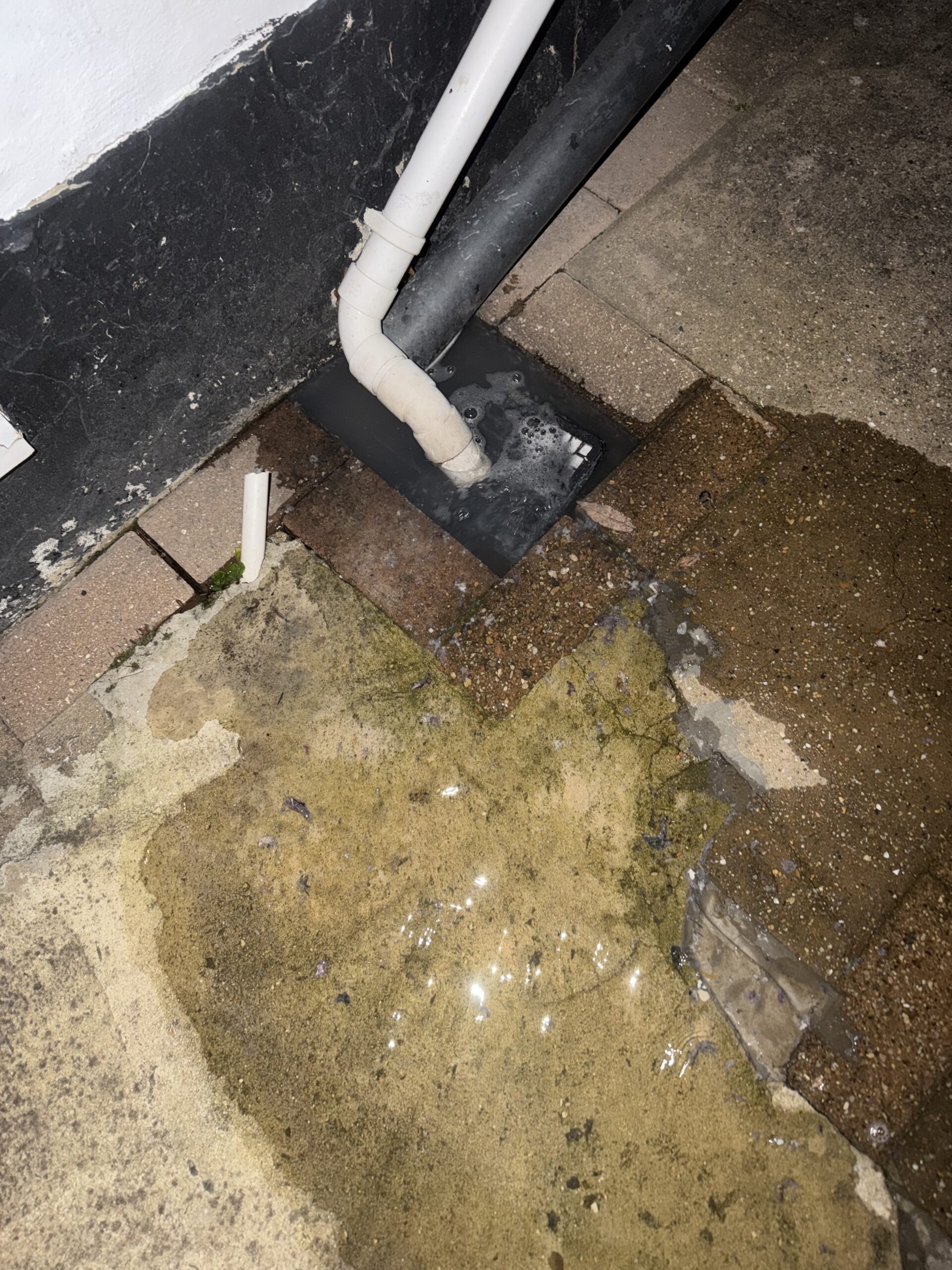
Yes. Blocked drains can cause water to back up and saturate surrounding ground, which can then penetrate the building structure. Overflowing manholes near house walls are a common source of unexplained damp.
Are you equipped to deal with shared or combined sewers?
Yes. We can survey both private drainage and the first sections of adopted sewers. Where a defect is within the public sewer, we will advise you on how to report it to Thames Water or the relevant water authority.
Who Owns the Drains? Thames Water, South East Water & Your Responsibility
Understanding where your drainage responsibility ends and the water company’s begins is one of the most common sources of confusion in drainage disputes. The rules changed significantly under the Water Industry Act 2011, when most private sewer connections were transferred to the water companies.
As a general rule in London properties: Thames Wateris responsible for public sewers — the adopted sewer running beneath the street and shared lateral drains serving multiple properties. You are responsible for your private drain runs from your property to the point where they connect to the public sewer. In Surrey properties served by South East Wateror in Affinity Water areas, the same principle applies through the relevant sewerage undertaker (Thames Water handles sewerage across most of Surrey, even where South East Water handles the water supply).
Our CCTV survey report clearly identifies whether defects are within your private drainage or within the public sewer — including the section where the lateral drain connects. We advise on how to report public sewer defects to the relevant water authority and assist with any evidence required.
Pre-Purchase Drainage Survey Guide
A CCTV drainage survey before exchange of contracts is one of the most cost-effective investments you can make when buying a property. Drainage defects that are invisible during a viewing can cost thousands to repair and are rarely covered by buildings insurance.
- Collapsed or cracked pipesare common in properties over 30 years old and may require full excavation and replacement
- Root intrusionfrom garden trees and street trees is a recurring issue across older areas of South London and Surrey, particularly in clay-soil areas
- Drain misconnections— surface water connected to the foul sewer or vice versa — are a defect that is becoming increasingly enforced by local authorities
- Missing or inadequate inspection chambersthat make future maintenance difficult and expensive
Our pre-purchase drainage survey report is formatted for use by solicitors, mortgage brokers and independent surveyors. Where defects are identified, we provide a repair estimate that can be used to renegotiate the purchase price or require remediation before completion.
CCTV Drainage Survey Cost Guide
Residential Survey
Full CCTV survey of internal and external drainage. Includes written report with WRc defect coding and video recording. Same-day survey report available.
High-Pressure Jetting
Blockage clearance using van-mounted jetting unit. Post-clearance CCTV inspection confirms drain is running clear. Combined survey and jetting rates available.
Drain Relining (CIPP)
No-dig structural repair for cracked or root-damaged pipes. Cost depends on pipe diameter, length and access. We provide a fixed price before any work starts.
More Questions Answered
How do I report a blockage in a public sewer to Thames Water?
Thames Water’s emergency line is 0800 316 9800. If our survey confirms a defect is within the adopted sewer rather than your private drain, we will provide the evidence you need to report it — including the CCTV footage, defect location and our written assessment. Thames Water is legally obliged to maintain adopted sewers at no cost to the property owner.
Can tree roots really cause damp inside my property?
Yes. Tree roots entering a drain through cracked joints can eventually cause partial blockage, which leads to water backing up and overflowing in the chamber. If this occurs near the house wall, the saturated ground around the overflow point can cause penetrating damp into the building structure. We frequently see this in South London gardens where large plane trees and other street trees are common.
What does drain relining involve and how long does it last?
Drain relining (CIPP — cured-in-place pipe) involves inserting a resin-impregnated felt liner into the existing pipe, which is then inflated against the pipe walls and cured. The result is a smooth, structurally-independent new pipe within the old one — no excavation required. Relined drains typically carry a 50-year design life and manufacturer’s warranty. Root penetration after relining is eliminated as the resin creates a seamless surface with no joints.
Areas We Cover
We operate across South London, North London, East London and throughout Surrey — typically within a 20-mile radius of Cheam, SM3.
South London
- Croydon
- Sutton
- Merton
- Wimbledon
- Tooting
- Balham
- Clapham
- Streatham
- Lambeth
- Wandsworth
- Kingston
- Richmond
- Thornton Heath
Surrey
- Guildford
- Woking
- Epsom
- Leatherhead
- Reigate
- Redhill
- Dorking
- Camberley
- Farnham
- Staines
- Weybridge
- Esher
- Cheam
North & East London
- Hackney
- Islington
- Camden
- Haringey
- Walthamstow
- Stratford
- East Ham
- Ilford
- Romford
- Barking
- Lewisham
- Greenwich
Not sure if we cover your area? Call us on 0800 054 1524— we’re happy to advise.
Related Services
Ready to Get Started?
Surveys available across London and Surrey. Same-day attendance available.
The report each of you needs
Homeowners · Landlords · Property Managers · Estate Agents · Housing Associations & Councils · Insurers