Stop Water Getting Into Your Property
Expert diagnosis, waterproofing and structural repair — from the entry point to the finished repair.
What is Water Ingress?
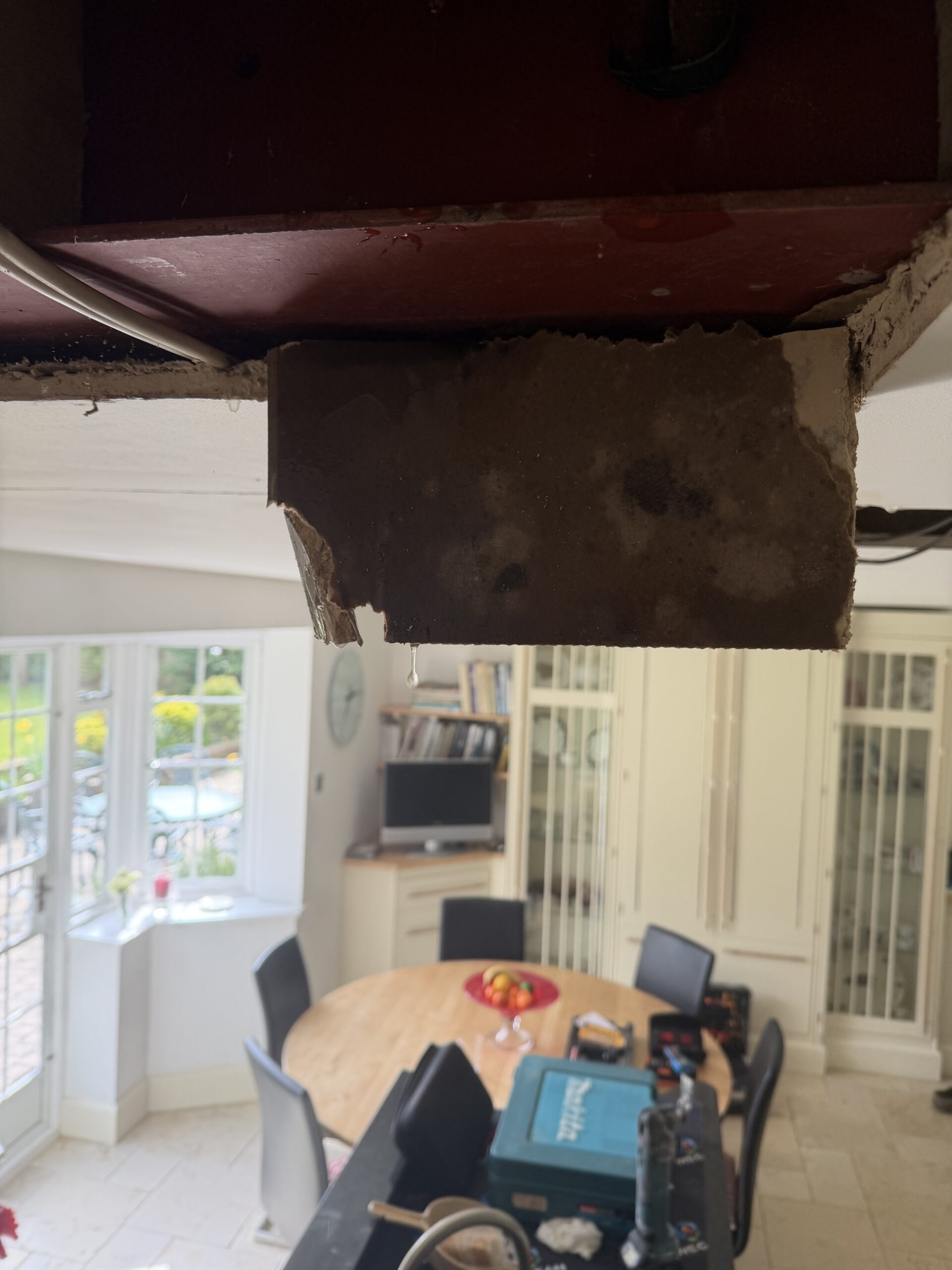
Water ingress is any unwanted water entering a building through its fabric — walls, roof, windows, doors or floors. Unlike rising damp (which originates from the ground) or condensation (which originates from within the property), water ingress enters from outside and is typically driven by rainfall, groundwater pressure or a defect in the building’s weathering envelope.
Water ingress is often misdiagnosed because the visible damp patch inside the building can be some distance from where water is actually entering. Our specialist detection methods — including thermal imaging and tracer dye — allow us to trace the water path back to its true entry point, rather than simply treating the visible symptom.
Common Sources of Water Ingress
Porous or Defective Masonry
Brickwork becomes more porous as it ages, particularly in exposed locations. Defective pointing (mortar joints), cracked bricks and failed render allow rainwater to penetrate. Treatment involves repointing, render repair and application of breathable water-repellent masonry coatings.
Roof and Chimney Defects
Failed lead flashings around chimney stacks, dormer windows and roof penetrations are a leading cause of water ingress in older properties. Cracked or slipped tiles, damaged ridge tiles and blocked valley gutters all provide entry points.
Window and Door Frames
Deteriorated sealant around window and door frames, cracked frames and poorly installed units allow water to track into the wall cavity or directly into the structure. Common in properties where windows have been replaced without adequate attention to the surrounding reveal.
Flat Roofs
Flat roofs are particularly vulnerable to water ingress. Ponding water eventually finds any weakness in the felt, EPDM or GRP membrane. Blocked roof drains accelerate deterioration.
Basement and Substructure
Hydrostatic pressure from groundwater in waterlogged ground forces moisture through basement walls, floors and below-ground voids. Increasing rainfall and rising water tables in London and Surrey are making this more common.
Failed or Bridged DPC
The damp proof course (DPC) in a wall prevents ground moisture rising. When it is bridged by raised external ground levels, render carried below DPC level, or debris in a cavity wall, it becomes ineffective and allows moisture to bypass it.
How We Diagnose Water Ingress
Tracing the True Entry Point
The most important step in treating water ingress is finding where it is actually entering — not just where it is appearing. We use a combination of:
- External inspection— systematic examination of the building envelope looking for cracks, defects, failed sealants and areas of deterioration
- Thermal imaging— identifying cold areas and moisture pathways within the wall structure
- Tracer dye testing— safe water-soluble dye applied to suspected entry points to confirm the route
- Internal moisture mapping— plotting moisture levels across affected areas to identify the direction of water travel
Waterproofing Treatment Options
- External masonry waterproofing coatings— breathable silicone-based coatings that repel water while allowing the structure to breathe. Invisible finish on brick, stone and render.
- Repointing and render repair— replacement of defective pointing and repair of cracks and failed render using appropriate mortars for the building type.
- Internal tanking— cementitious tanking slurry applied to basement walls to create an impermeable internal barrier. Used where external waterproofing is not viable.
- Cavity drainage systems— for below-ground areas, a cavity membrane and drainage channel system directs any water that enters to a sump and pump rather than allowing it to saturate the structure.
- Roof and flashing repairs— replacement of failed lead flashings, repair of flat roof membranes and clearance of blocked drainage.
- Window and door sealing— replacement of sealants, repair of frames and installation of appropriate weather seals.
How can I tell if I have water ingress or rising damp?
Rising damp typically shows below 1 metre and is associated with horizontal tide marks and salt deposits. Water ingress tends to track from higher in the structure and may be intermittent, coinciding with heavy rain. Our survey will confirm the type.
Can water ingress cause structural damage?
Yes. Long-term water ingress can cause masonry to spall, lintels and frames to rust and expand (causing cracking), and structural timbers to rot. Early treatment prevents much more costly structural repairs.
Is waterproofing a long-term solution?
Yes, when properly diagnosed and applied. We provide guarantees on all waterproofing works and address any contributing defects as part of the treatment.
Ready to Get Started?
Surveys available across London and Surrey. Same-day attendance available.