Professional Mould Removal Across London & Surrey
Mould is never the whole problem — it’s the symptom. Bleach and a repaint will hide it for a few weeks; it comes back because the moisture that feeds it is still there. Our approach is to find the cause first (condensation, a hidden leak, rising or penetrating damp), treat the mould properly with professional biocidal treatment, and then fix what’s driving it — with our own engineers, not subcontractors. We work across London and Surrey, same-day where we can, and every job comes with a written report — which matters if you’re a tenant reporting to a landlord, or a landlord who needs to show you acted.
Understanding Mould in Your Home
Mould is a type of fungus that grows where there is moisture, poor ventilation and organic material to feed on. In domestic properties, the most common types are Cladosporium(typically green or black), Aspergillus(various colours) and Stachybotrys chartarum— commonly known as black mould — which is the most hazardous to health.
Mould growth is always a symptom of a moisture problem. Simply painting over mould or cleaning it with bleach will not resolve the issue — unless the moisture source is identified and treated, the mould will return within weeks. At Damp Mould Leak, we identify the root cause, eliminate the mould properly using professional biocidal treatments, and then fix the underlying problem.
The NHS states that people living in damp and mouldy homes are more likely to have respiratory problems, respiratory infections, allergies and asthma. Damp and mould can also affect the immune system. Children and elderly people are particularly vulnerable.
Health Effects of Mould Exposure
Respiratory Problems
Mould spores inhaled into the lungs can cause persistent coughing, wheezing, shortness of breath and worsening of asthma. Long-term exposure is associated with the development of chronic respiratory conditions.
Allergic Reactions
Mould is a common allergen. Exposure causes sneezing, runny nose, red eyes and skin rashes. In sensitised individuals, even small amounts of mould can trigger significant reactions.
Neurological Effects
Some toxic moulds — particularly black mould (Stachybotrys) — produce mycotoxins that can cause headaches, fatigue, difficulty concentrating and neurological symptoms in people with significant exposure.
Children at Risk
Children’s developing immune systems are particularly vulnerable. Mould exposure in childhood is associated with higher rates of asthma, eczema and respiratory infections.
Awaab’s Law
Following the death of 2-year-old Awaab Ishak from mould exposure in social housing, the law now requires landlords to act on mould reports within 14 days. Our reports support legal compliance.
Immunocompromised Individuals
People on immunosuppressant medications, undergoing chemotherapy or with compromised immune systems face the highest risk from mould exposure, including serious systemic infections.
Our Mould Treatment Process
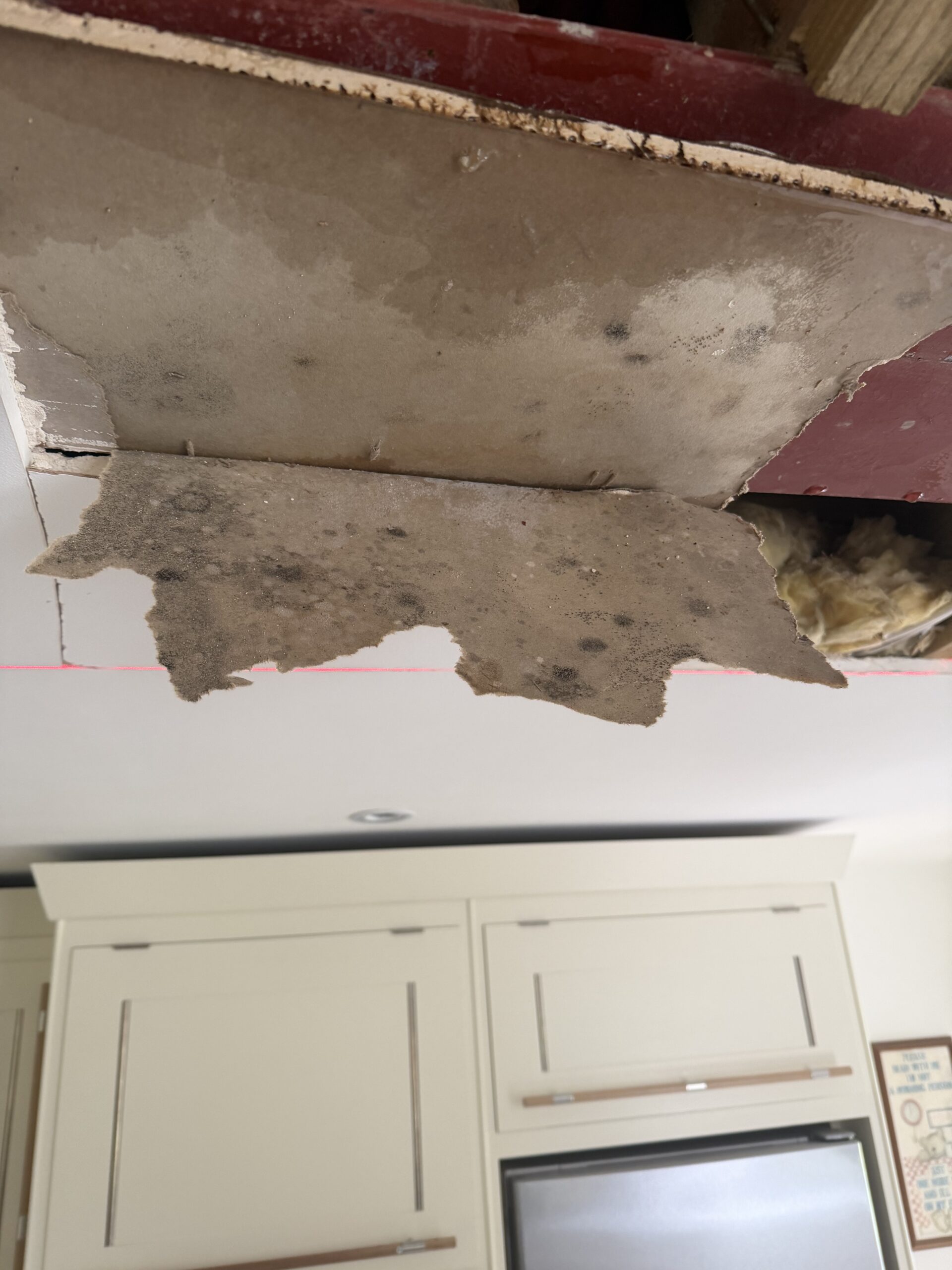
We Don’t Just Clean It — We Fix It
Many companies will simply spray the mould with bleach and paint over it. This temporarily removes the visual appearance but does nothing to address the moisture causing the growth. The mould returns, often worse than before.
Our approach is systematic: we survey the property, identify the moisture source, treat the mould with professional biocidal products, address the underlying cause, and then carry out reinstatement works to leave the property clean and protected.
1. Mould Survey
Full inspection of all affected areas using moisture meters, thermal imaging and visual assessment. We identify mould type, extent and the moisture source driving the growth.
2. Biocidal Treatment
Application of professional-grade biocidal mould treatment products. These penetrate the surface to kill mould at the root — not just the visible surface growth. Not bleach.
3. Root Cause Fix
We identify and treat the underlying moisture source — whether that is a damp proofing failure, ventilation deficiency, structural defect or plumbing leak.
4. Reinstatement
Anti-mould replastering, mould-resistant paint application and surface restoration. We leave the area looking clean and protected against future growth.
5. Written Report
Full written report with photographic evidence, findings, treatment applied and recommendations. Awaab’s Law compliant. Written for housing authorities and insurers.
6. Guarantee
All mould treatment work is guaranteed. If mould returns in the treated area within the guarantee period due to our treatment, we return at no charge.
Types of Property We Treat
- Residential properties — houses, flats, maisonettes and HMOs
- Social housing — council properties and housing association homes (Awaab’s Law compliant reports provided)
- Rental properties — reports suitable for landlord compliance and tenant disputes
- Commercial properties — offices, retail premises and light industrial units
- Pre-purchase inspections — mould surveys carried out before exchange of contracts
- Insurance claims — independent survey reports prepared to the standard major UK insurers require
Frequently Asked Questions
Is black mould dangerous?
Black mould (Stachybotrys chartarum) produces mycotoxins that can cause respiratory problems, allergic reactions and in cases of prolonged exposure, neurological symptoms. Anyone with breathing difficulties or a compromised immune system should leave the property if black mould is present and seek professional treatment immediately.
Can I remove mould myself?
Small areas of surface mould on non-porous surfaces can be cleaned with appropriate products. However, mould covering more than 1 square metre, mould inside walls or ceilings, or any mould where the moisture source is unknown should always be professionally treated. DIY treatment without addressing the cause guarantees the mould returns.
How long does mould treatment take?
A typical residential treatment takes 1–4 hours depending on the extent of mould growth. Reinstatement plastering may require additional visits once the biocidal treatment has fully dried.
Will the mould come back?
If the moisture source is correctly identified and treated, professionally applied biocidal treatment is highly effective at preventing regrowth. We address both the mould and its cause as part of our standard service.
Related Services
Ready to Get Started?
Surveys available across London and Surrey. Same-day attendance available.
Areas we cover across London & Surrey
Our engineers and surveyors work throughout South West London and Surrey. We’re based in New Malden and regularly attend Kingston, Wimbledon, Raynes Park, Worcester Park and Surbiton, as well as Putney, Wandsworth, Richmond, Twickenham, Mitcham, Sutton, Epsom and the wider London & Surrey area. Not sure if we cover you for mould treatment? Call 0800 054 1524 and ask.
Request a survey or callback
Tell us what’s happening and one of our team will get back to you — usually within 2 hours during business hours. Prefer to talk now? Call 0800 054 1524 or WhatsApp 07733 019492. 24/7 emergency call-outs across London & Surrey.
Send Us a Message
The report each of you needs
Homeowners · Landlords · Property Managers · Estate Agents · Housing Associations & Councils · Insurers