What Happens During a CCTV Drainage Survey?
A step-by-step guide to the process — from booking to receiving your written report.
A CCTV drainage survey is one of the most effective ways to diagnose drainage problems — but many homeowners and landlords are unsure what it involves and what to expect. This guide explains the entire process from start to finish.
When Do You Need a CCTV Drainage Survey?
- Drains backing up or running slowly despite previous clearance attempts
- Recurring drain blockages in the same location
- Subsidence, sinkholes or soft patches of ground near drain runs
- Damp patches inside a property with no obvious cause above ground
- Before purchasing a property — understanding the drainage condition
- Following a blockage clearance — to confirm the drain is structurally sound
- As part of an insurance claim involving drainage or water damage
Step 1: Initial Discussion and Access Point Identification
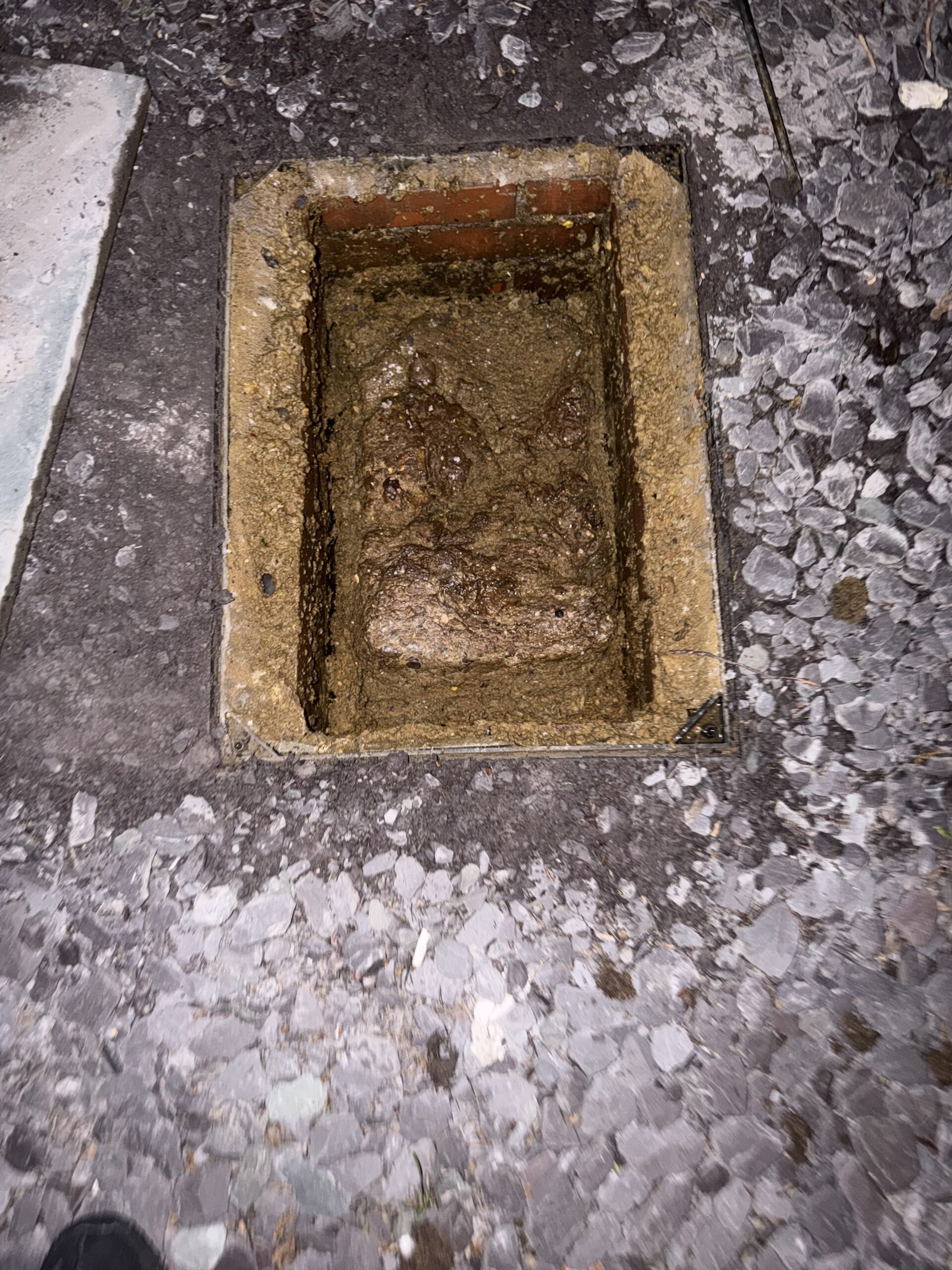
Before the camera goes in, our drainage engineer will discuss your symptoms with you and identify the best access point for the survey. This is typically the nearest inspection chamber (manhole) to the problem area, or the closest point downstream of it.
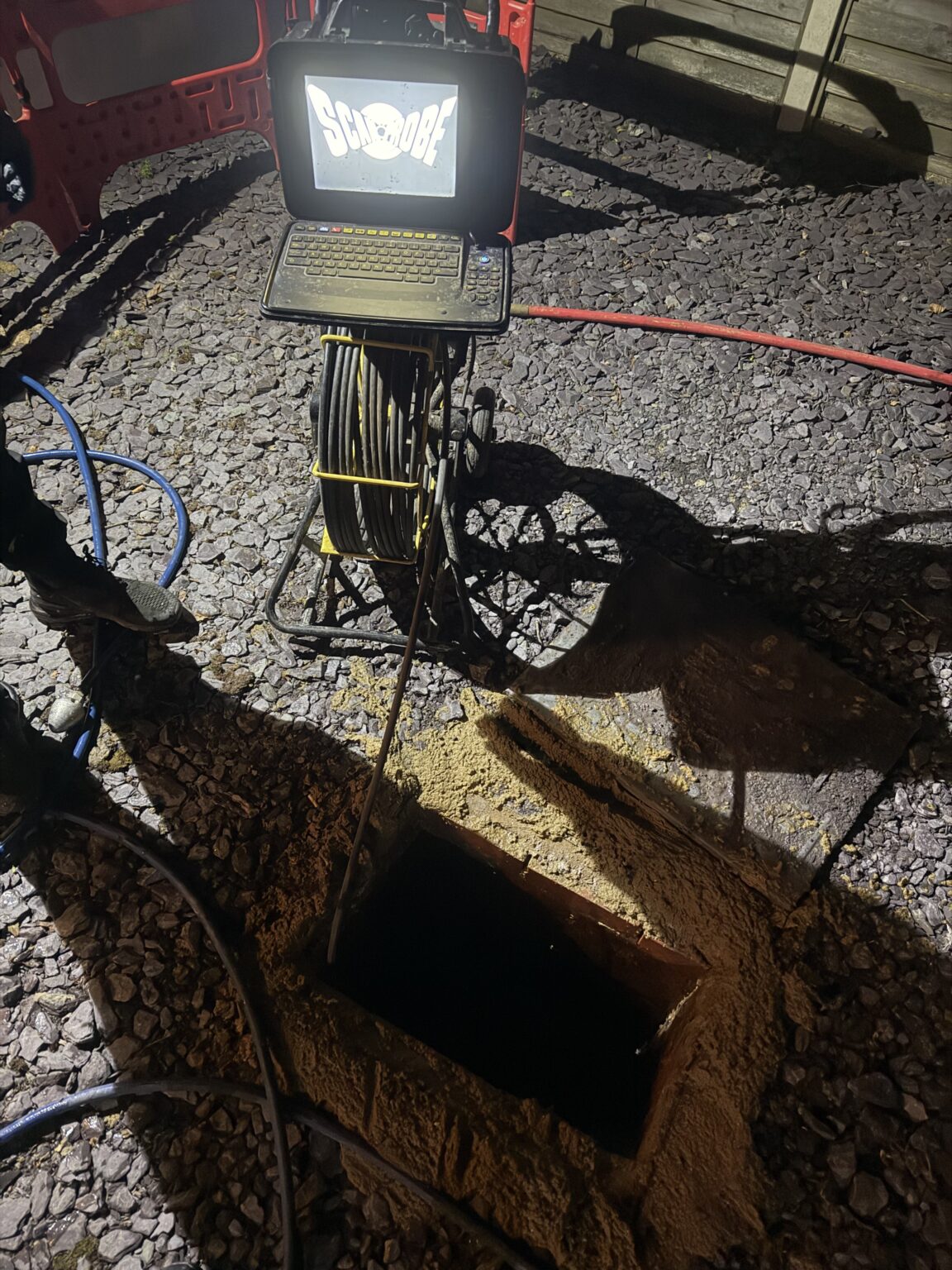
We will also check the site for any information about the drainage layout — drain run direction, likely connection points and any previous works. This allows us to plan the survey efficiently.
Step 2: Camera Insertion
We feed a waterproof HD camera mounted on a flexible cable (or self-propelled crawler for larger drains) into the access point. The camera transmits live footage to a monitor and records everything for the report.
For residential drain runs (typically 100mm–150mm diameter), a push-rod camera is used. For larger commercial drains, a self-propelled wheeled crawler is deployed.
Step 3: Live Survey
You can watch the survey live on the monitor — many clients find it fascinating to see what is happening inside their drains. The engineer will narrate findings as they occur, pointing out any defects, blockages or areas of concern.
The survey covers the entire accessible drain run — from the access point to the next chamber, or to the connection with the public sewer. Typical residential surveys cover 30–80 metres of drain.
Step 4: What We Look For
- Blockages — fat, grease, silt, root masses and foreign objects restricting or stopping flow
- Root intrusion — tree and shrub roots entering through cracks and joints
- Collapsed or deformed pipes — structural failure requiring repair or replacement
- Displaced or open joints — gaps between pipe sections allowing groundwater ingress and root entry
- Cracks and fractures — longitudinal and circumferential cracking indicating structural weakness
- Debris buildup — silt, gravel and construction debris accumulating in the invert
Step 5: High-Pressure Jetting (If Required)
If a blockage is found during the survey, we will recommend immediate high-pressure water jetting to clear it. Our van-mounted jetting unit operates at up to 4000 PSI — sufficient to clear compacted grease, silt deposits and root masses that rods and chemicals cannot shift.
After jetting, we carry out a post-clearance CCTV inspection to confirm the drain is clear and check for structural defects that may have been concealed by the blockage.
Step 6: Written Report
Within 24 hours of the survey, you will receive a comprehensive written report including:
- A summary of all defects found, coded to the WRc drain defect classification system
- Still images captured from the video at each defect location
- The full survey video recording
- A prioritised list of recommended actions
- Costed options for any repairs required
Our reports are written for insurers, local authorities and solicitors.
How Long Does a Survey Take?
A standard residential CCTV drainage survey takes 1.5–3 hours depending on the length and complexity of the drain run, whether jetting is required, and the number of access chambers surveyed. We will give you a realistic time estimate when you book.
Read more about our CCTV drainage survey service.
Need a professional survey?
We cover all of London and Surrey. Same-day attendance available.